
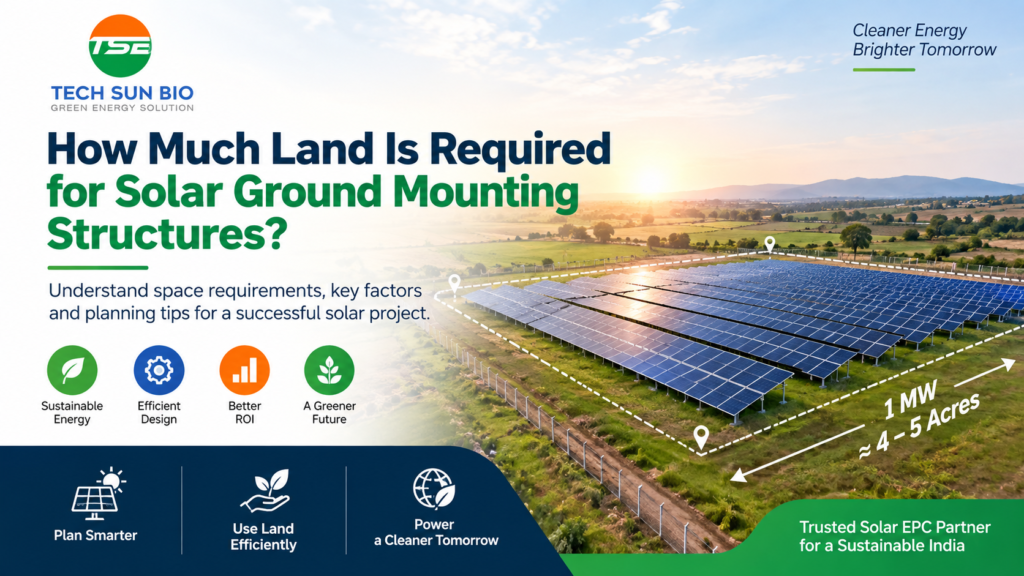
How Much Land Is Required for Solar Ground Mounting Structures?
As solar energy adoption continues to grow across India, ground-mounted solar systems are becoming a preferred choice for businesses, industries, institutions, and large-scale solar projects. One of the most common questions asked by project owners is: How much land is required for solar ground mounting structures? The answer depends on several factors, including project capacity, panel efficiency, site conditions, tilt angle, and the type of solar ground mounting structure used. Understanding land requirements is essential for planning a cost-effective and high-performing solar installation. Quick Answer On average, a 1 MW ground-mounted solar power plant requires approximately 4 to 5 acres of land. However, the exact land requirement may vary depending on solar panel technology, project design, terrain conditions, and spacing requirements between rows of panels. Why Land Requirement Matters in Solar Projects Land is one of the most important components of any ground-mounted solar project. Proper land planning ensures: Maximum energy generation Reduced shading losses Better maintenance accessibility Improved project efficiency Long-term operational reliability A well-designed solar plant can optimize available space while maintaining high energy output and performance. Factors That Determine Land Requirements 1. Solar Plant Capacity The size of the solar power plant directly impacts land requirements. Typical estimates include: Plant Capacity Approximate Land Requirement 100 kW 0.4–0.5 Acre 500 kW 2–2.5 Acres 1 MW 4–5 Acres 5 MW 20–25 Acres 10 MW 40–50 Acres Larger installations naturally require more space to accommodate additional solar modules and supporting infrastructure. 2. Solar Panel Efficiency High-efficiency solar panels generate more electricity from a smaller area. Projects using advanced solar modules can reduce overall land requirements compared to conventional panels. Many businesses working with a professional solar company in Surat prefer high-efficiency modules to maximize power generation while minimizing land usage. 3. Tilt Angle and Orientation Solar panels must be installed at specific tilt angles to capture maximum sunlight throughout the year. Greater tilt angles require larger spacing between panel rows to prevent shading. This spacing increases the overall land requirement for the project. 4. Ground Mounting Structure Design Different mounting structures have different space requirements. Fixed-tilt systems generally require less land than tracking systems. A reliable best solar EPC company in Surat evaluates site conditions and recommends the most suitable mounting structure for optimal energy production and land utilization. 5. Site Topography Flat land is ideal for ground-mounted solar installations because it allows efficient panel placement and easier construction. Uneven terrain may require additional grading, customized mounting structures, or increased spacing, which can impact land requirements and project costs. Land Requirement for Commercial and Industrial Solar Projects Commercial and industrial businesses often choose ground-mounted solar systems when sufficient rooftop space is unavailable. For example: Manufacturing facilities Warehouses Educational institutions Hospitals Industrial parks These projects benefit from large-scale solar generation while reducing electricity expenses over the long term. Businesses looking for a trusted solar company in Surat often evaluate available land before planning a commercial solar project to ensure maximum return on investment. How to Optimize Land Usage in Ground-Mounted Solar Projects Proper engineering and project planning can significantly improve land utilization. Some effective strategies include: Using High-Efficiency Solar Modules Advanced solar panels generate more power from less space, reducing the total land requirement. Optimizing Row Spacing Accurate solar design helps minimize shading while maximizing energy output. Selecting the Right Mounting Structure The right solar ground mounting structure can improve energy generation without unnecessarily increasing land requirements. Professional Site Assessment Working with the best solar EPC company in Surat ensures accurate land analysis, engineering design, and project execution. Importance of Choosing the Right Solar EPC Partner A successful ground-mounted solar project depends on more than just available land. Proper planning, engineering, procurement, installation, and maintenance are equally important. An experienced solar company in Surat can assess site conditions, calculate exact land requirements, design efficient mounting structures, and ensure smooth project execution. Similarly, the best solar EPC company in Surat provides end-to-end support, helping businesses maximize solar energy production while optimizing project costs and available space. Why Businesses Trust Tech Sun Bio Tech Sun Bio is a trusted solar project developer and EPC company delivering rooftop, commercial, industrial, and ground-mounted solar solutions. Founded in 2014 by IIT Bombay alumnus Tejas Patel, the company combines technical expertise with end-to-end project execution to help organizations adopt sustainable energy solutions. Whether you need a rooftop solar installation or a large-scale ground-mounted solar project, Tech Sun Bio provides customized solutions designed for long-term performance and maximum return on investment. Conclusion The amount of land required for solar ground mounting structures depends on factors such as project capacity, panel efficiency, site conditions, and system design. In general, a 1 MW solar plant requires approximately 4 to 5 acres of land. Proper planning and professional engineering are essential to maximize energy generation while optimizing land utilization. If you are planning a ground-mounted solar project, partnering with an experienced solar company in Surat can help you determine the exact land requirement for your site. Working with the best solar EPC company in Surat ensures efficient project execution, reliable performance, and long-term energy savings, making your solar investment more productive and sustainable. FAQs 1. How much land is required for a 1 MW solar power plant? A 1 MW ground-mounted solar power plant typically requires around 4 to 5 acres of land, depending on panel efficiency and project design. 2. What factors affect the land requirement for solar ground mounting structures? Factors such as plant capacity, solar panel efficiency, tilt angle, row spacing, site topography, and mounting structure design affect land requirements. 3. Can high-efficiency solar panels reduce land requirements? Yes, high-efficiency solar panels generate more electricity in less space, helping reduce the overall land required for a solar project. 4. Is flat land necessary for ground-mounted solar installations? Flat land is preferred because it simplifies installation and improves efficiency, but solar systems can also be installed on uneven terrain with proper engineering. 5. Why should I choose a professional solar EPC company for my project? A